Fertility Preservation
Egg, Sperm & Embryo Freezing: Preserve Your Reproductive Autonomy
Fertility preservation empowers you to biologically pause your reproductive clock. Whether you are prioritizing education and career goals, delaying parenthood by choice, or facing medical treatments such as chemotherapy, pelvic surgeries, or endometriosis, our advanced vitrification cryopreservation safeguards your peak gamete quality indefinitely.
What is Vitrification?
Vitrification is an ultra-rapid flash-freezing method that transitions cells directly into a glass-like solid state at -196°C. By cooling at rates exceeding 20,000°C per minute, it completely prevents destructive ice crystal formation, achieving greater than 95% post-thaw survival.
Safe Storage Duration
Oocytes and embryos stored in high-security liquid nitrogen dewars remain biologically suspended with zero metabolic degradation, clinically verified for safe cryo-banking for 10 or more years.
Who Can Benefit from Egg Freezing?
Oocyte vitrification provides vital reproductive security across diverse medical, genetic, and elective circumstances:
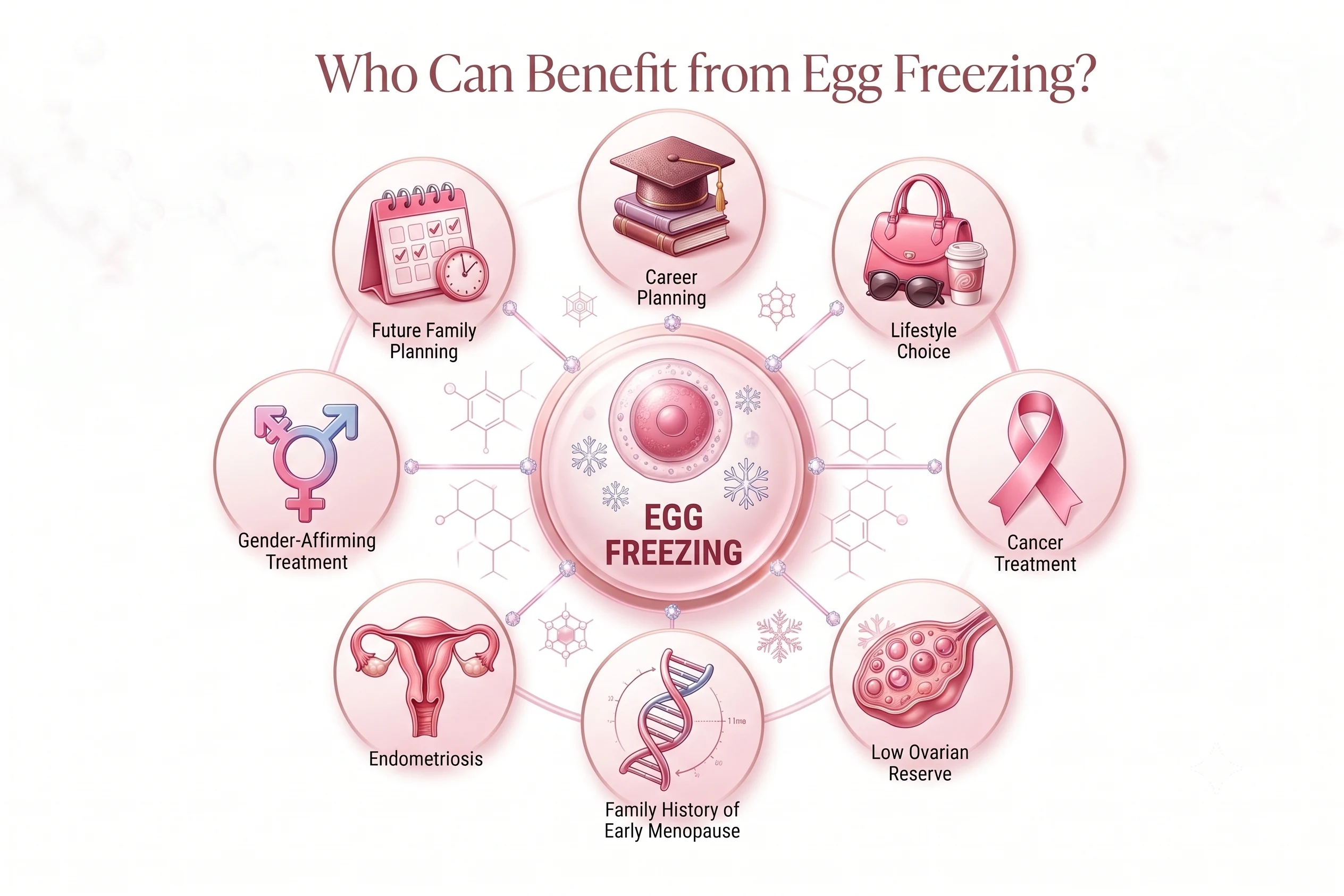
Career, Education & Personal Timing
Choosing to freeze eggs in your 20s or early 30s locks in your eggs at peak biological quality and chromosomal normality, allowing you to pursue career and personal goals without biological clock anxiety.
Cancer Treatment & Oncofertility
Chemotherapy, radiation therapy, and extensive pelvic surgery can cause premature ovarian failure. Our rapid oncofertility protocol enables safe egg retrieval within 10 to 14 days prior to cancer treatments.
Endometriosis & Low Ovarian Reserve
Progressive conditions like ovarian endometriomas and early diminishing AMH reserves can rapidly deplete the follicle pool. Freezing eggs early protects against future follicle exhaustion.
Family History of Early Menopause
Women with a familial history of premature ovarian insufficiency (POI) or genetic carrier status can safeguard their biological parenthood options well before ovarian decline begins.
Our Fertility Preservation Options
Individualized cryopreservation protocols engineered for female, male, and couple fertility needs:
Egg Freezing (Oocyte Vitrification)
Mature eggs are collected under light sedation and flash-frozen within minutes. Ideal for women planning parenthood in their mid-to-late 30s or prior to medical procedures.
Embryo Freezing (Blastocyst Vitrification)
Eggs fertilized with partner or donor sperm are cultured to Day 5 blastocyst stage before freezing, providing the highest proven statistical pregnancy rate upon future transfer.
Sperm Freezing (Semen Cryopreservation)
Ejaculated or surgically retrieved (TESA/PESA) sperm is washed, cryo-protected, and preserved for future IUI, IVF, or ICSI cycles, critical prior to vasectomy or oncology care.
Urgent Oncofertility Care
Rapid-start stimulation protocols initiated immediately without waiting for menstrual cycle day 1, safely freezing eggs or sperm before scheduled chemotherapy or pelvic radiotherapy.
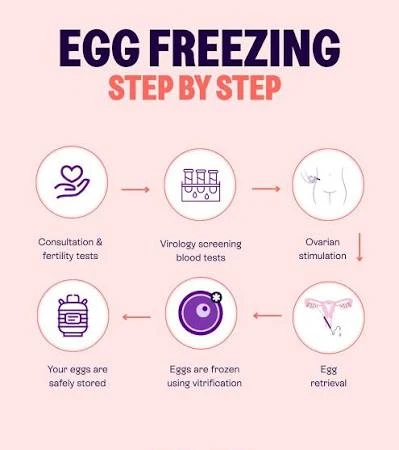
Step-by-Step Preservation Procedures
Select a procedure below to explore each clinical phase from initial consultation to secure cryo-banking:
Egg Freezing Protocol: Four Steps
4 Clinical MilestonesInitial Assessment & AMH Testing
Consultation reviewing reproductive goals, baseline pelvic ultrasound, and serum AMH blood test to determine individual ovarian reserve.
Controlled Ovarian Stimulation
Daily hormone injections for 9 to 11 days encourage multiple follicles to mature, tracked via ultrasound scans every 2 to 3 days.
Ultrasound-Guided Egg Retrieval
A comfortable 15-minute daycare procedure under light sedation collects mature eggs through transvaginal ultrasound aspiration without cuts or stitches.
Flash Vitrification & Cryo-Banking
Mature eggs are flash-frozen at -196°C in liquid nitrogen tanks with automated barcode tracking and 24/7 temperature telemetry.
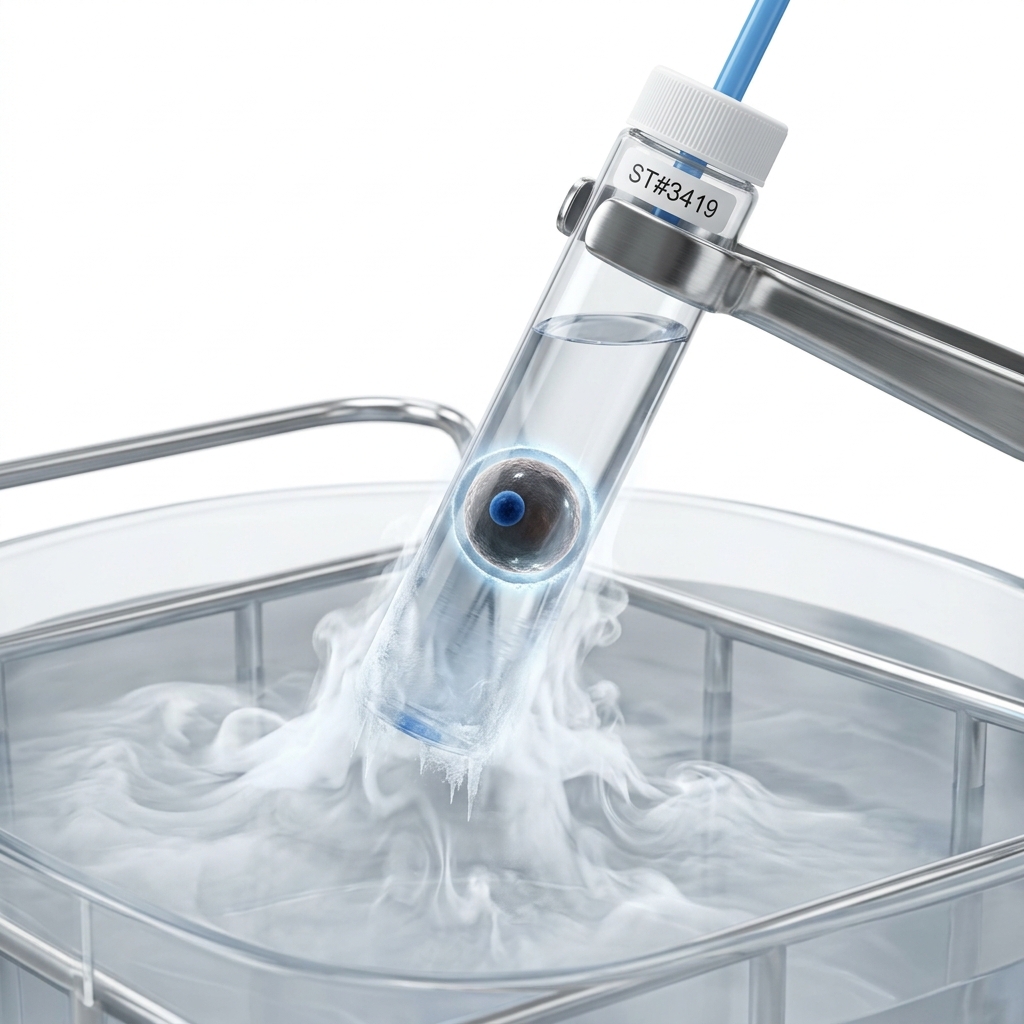
Scientific Excellence in Cryogenic Storage
Unlike slow freezing methods of the past, our embryology suite uses ultra-rapid vitrification in liquid nitrogen at -196°C. This eliminates cellular damage caused by ice crystal expansion, preserving gamete cellular organelle integrity for over a decade with zero biological aging.
> 95%
Thaw Survival10+ Yrs
Safe Storage24/7
Telemetry LogEthical, Secure & ART Act 2021 Compliant Cryo-Banking
All gamete and embryo cryopreservation protocols at Dr. Devkriti Tiwari Dhirawani Centre strictly comply with ICMR and ART Act 2021 regulations, with double-witness electronic barcode tracking, secure patient identification, and clear, transparent storage renewal terms.