Female Infertility Treatments
Compassionate, Advanced Care for Complex Female Fertility
Led by Dr. Devkriti Tiwari Dhirawani (MBBS, MD, Fellow in Advanced Laparoscopic Surgery & Embryology, Kiel, Germany), our centre delivers world-class medical and minimally invasive surgical solutions for female reproductive conditions.
Female fertility relies on a delicate biological symphony: timely ovulation, patent and functional fallopian tubes, healthy ovarian reserve, a receptive endometrial lining, and normal pelvic anatomy. When any step encounters obstacles, comprehensive diagnostics, individualized hormonal protocols, and precision endoscopy make biological motherhood achievable.
Kiel Trained
Germany FellowshipLow AMH Care
DuoStim ProtocolsHD Endoscopy
DIE & HysteroscopyHigh Success
Evidence-Based IVF
Tubal Factor
30% of casesHydrosalpinx, post-infection blockages, or fimbrial damage effectively bypassed via IVF.
Endometriosis
25% of casesDeep infiltrating endometriosis (DIE) and endometriomas treated with microsurgical excision.
PCOS & Ovulation
35% of casesHormonal imbalance and anovulatory cycles managed with targeted induction and tracking.
Uterine Factors
15% of casesPolyps, septums, and submucosal fibroids corrected via hysteroscopic resectoscopy.
Specialized Conditions We Treat
We offer comprehensive diagnostic evaluations and tailored treatments designed to restore natural fertility or optimize IVF success:
Tubal Factor & Blockages
Damaged or occluded fallopian tubes prevent fertilization. While minor adhesions may be cleared laparoscopically, IVF provides a direct, highly successful detour past tubal damage.
Endometriosis & DIE Surgeries
Ectopic endometrial tissue causing severe pelvic inflammation and organ distortion. Dr. Devkriti specializes in Laparoscopic Deep Infiltrating Endometriotic Surgeries (DIE) to restore pelvic anatomy and fertility.
PCOS & Ovulatory Disorders
Polycystic Ovary Syndrome and irregular cycles addressed through insulin sensitization, individualized letrozole/gonadotropin stimulation protocols, and rigorous follicular monitoring.
Uterine Cavity Abnormalities
Endometrial polyps, submucosal fibroids, intrauterine adhesions (Asherman's syndrome), and congenital septums corrected via Fertility Enhancing Hystero-Laparoscopy and resectoscopy.
Understanding Ovarian Reserve & Poor Ovarian Response
Scientific management of low AMH, advanced maternal age, and diminished follicular pool.
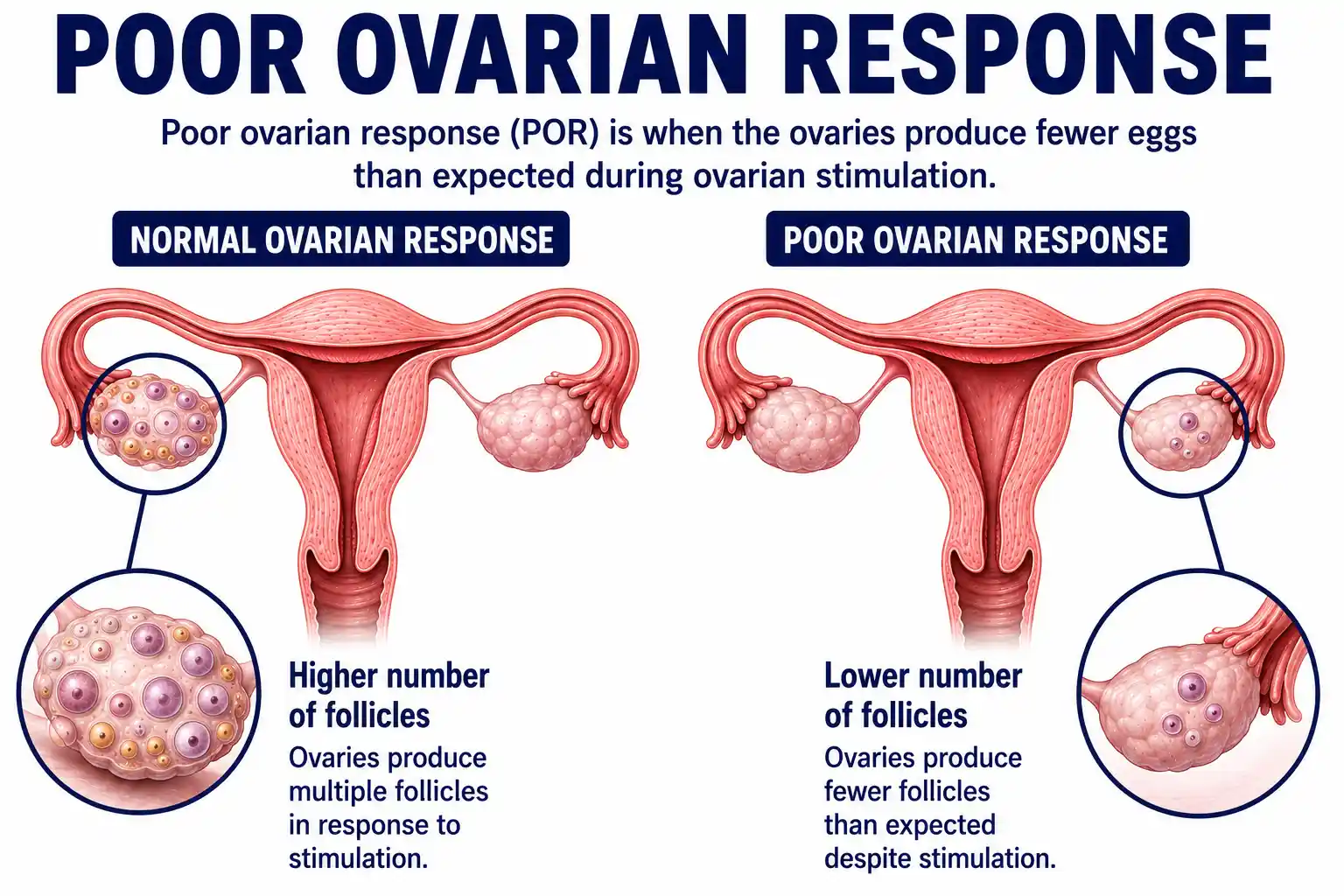
Key Biomarkers & Clinical Management
A woman is born with a finite pool of eggs. Ovarian Reserve reflects the quantity and functional competence of her remaining oocytes, evaluated via serum Anti-Müllerian Hormone (AMH) and Antral Follicle Count (AFC) on high-resolution transvaginal ultrasound.
How We Navigate Low AMH / Poor Response:
- DuoStim (Dual Stimulation): Two stimulation cycles within the same month to double egg yield.
- Mild Stimulation & Natural Modified IVF: Focuses on superior egg quality over high quantity.
- Embryo Pooling: Accumulating blastocysts over consecutive cycles prior to frozen embryo transfer.
Even with low AMH (below 1.0 ng/mL), biological parenthood is achieved regularly at our centre through tailored embryological techniques.

Precision Endoscopy for Pelvic Anatomy Restoration
Distortions of pelvic anatomy from adhesions, prior infections, or severe endometriosis prevent the fallopian tubes from capturing ovulated eggs. Under Dr. Devkriti's surgical expertise, advanced 3D laparoscopy accurately releases adhesions, restores tubo-ovarian relationship, and dramatically elevates conception probability.
- Daycare Laparoscopy: Minimal discomfort, keyhole incisions, same-day discharge.
- Endometriosis DIE Excision: Complete clearance of deep pelvic disease.
- Simultaneous Hysteroscopy: Evaluates uterine cavity receptivity during the same anesthesia.
Chances of Pregnancy by Age Breakdown
Age remains an important biological factor influencing egg reserves and chromosomal normalcy. Here is a transparent breakdown of reproductive potential:
Age: Under 35
50% to 60%+ per cycleOptimal egg quality and high euploidy (chromosomally normal) rates. Highest probability of first-cycle success; fewer stimulation cycles generally required.
Age: 35 to 37
40% to 50% per cycleGradual biological decline in follicular pool. Individualized stimulation protocols and precision blastocyst culture continue to yield excellent pregnancy rates.
Age: 38 to 40
30% to 40% per cycleMore noticeable reduction in egg numbers and quality. Blastocyst culture, sequential stimulation, and genetic screening (PGT-A) are often recommended.
Age: Over 40
Individualized ProtocolsThorough evaluation is paramount. Multiple egg collection cycles, DuoStim, specialized embryo culture, or donor egg alternatives are transparently explored.
Frequently Asked Questions About Female Fertility
Medically verified answers to common questions regarding ovarian reserve, fallopian tubes, and fertility treatments: