Advanced Embryology & ICSI
World Class IVF Care Backed by Science, Guided by Compassion
In Vitro Fertilization (IVF) commonly known as the “test tube baby” procedure remains the gold standard of assisted reproductive technology for couples and individuals facing complex fertility challenges. Our IVF program combines advanced laboratory embryology, continuous monitoring, and individualized stimulation protocols to maximize each patient's realistic chance of a healthy pregnancy. Every treatment plan is designed around your specific diagnosis, history, and goals never a one-size-fits-all protocol.
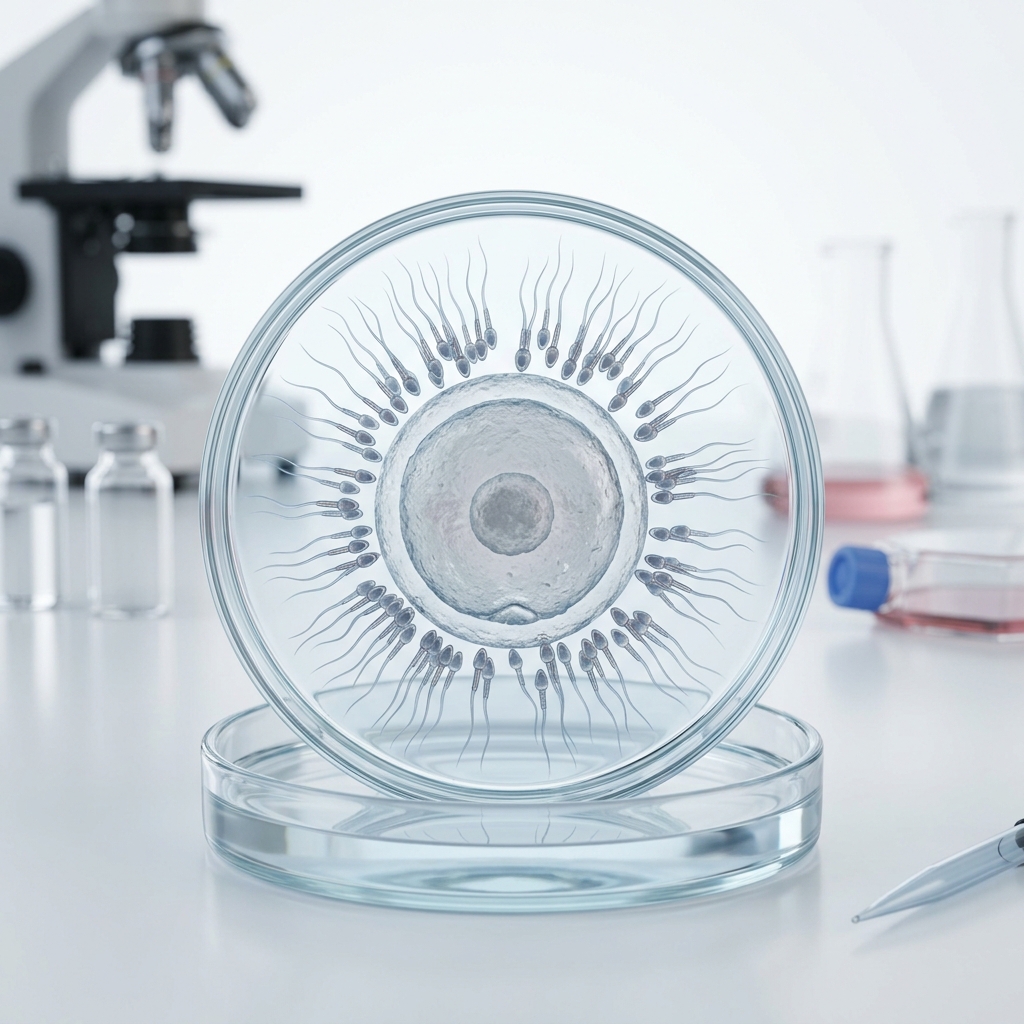
IVF involves retrieving mature eggs from the ovaries and fertilizing them with sperm inside a controlled laboratory environment. The resulting embryos are cultured and closely monitored for several days before the healthiest one(s) are transferred into the uterus. IVF can address a wide spectrum of fertility issues from tubal blockages to severe male-factor infertility and has helped countless people build the families they've hoped for.
What Happens in an IVF Cycle?
An IVF cycle involves gentle ovarian stimulation, precision ultrasound guided egg retrieval, controlled laboratory fertilization, and blastocyst transfer into the uterus for natural implantation.
Optimal Transfer Stage
Extended culture to the Day 5–6 blastocyst stage ensures that only embryos demonstrating peak cellular vitality and highest implantation potential are selected for transfer.
Interactive Clinical Graph & Predictive Outcomes
Explore real-time data models for age prognosis, blastocyst culturing, and frozen transfer protocols:
Single fresh or frozen blastocyst transfer
Subsequent frozen embryo transfer (FET)
Maximal cumulative biological probability
vs 32% for Day 3 embryo (+81% relative increase in uterine attachment)
Extended benchtop incubation selects embryos with highest chromosomal vitality
vs 24% high-risk multiples in unselected Day-3 double embryo transfer
Uterine lining is prepared under natural physiological hormone conditions
63% ongoing pregnancy in FET vs 46% in immediate fresh post-stimulation cycle
Complete elimination of life-threatening Ovarian Hyperstimulation Syndrome
When Is IVF Recommended?
IVF is often the recommended path for those facing the following fertility challenges:
Blocked or Damaged Fallopian Tubes
IVF bypasses the tubes entirely, making it viable for tubal-factor infertility.
Male Factor Infertility
Low sperm count, poor motility, or abnormal morphology overcome via lab selection.
Ovulation Disorders
Including resistant PCOS or premature ovarian insufficiency.
Endometriosis
When endometrial tissue affects ovaries, tubes, or pelvic anatomy.
Unexplained Infertility
No identifiable cause after a comprehensive clinical fertility workup.
Previous Failed IUI
For couples who haven't achieved success with less invasive treatment options.
Genetic Disorders
To enable preimplantation genetic testing (PGT) and significantly reduce transmission risk.
The IVF Journey — Nine Guided Steps
A carefully coordinated journey bridging clinical expertise, lab precision, and constant patient support:
Consultation
An initial appointment (online or in-clinic) to review history and outline the treatment path.
Baseline Bloodwork & Ultrasound
Establishes reproductive health markers to tailor the most effective protocol.
Ovarian Stimulation
Medications stimulate the ovaries to develop multiple mature eggs.
Oocyte Maturation
Hormone treatment ensures eggs reach full maturity ahead of retrieval.
Egg Retrieval
A minor surgical procedure collects mature eggs for lab fertilization.
Fertilization (via ICSI)
A single sperm is injected into each mature egg; ~70% typically fertilize successfully.
Embryo Transfer
The healthiest embryo(s) are placed into the uterus for implantation.
Two-Week Wait
The waiting period between transfer and the confirmatory pregnancy test.
Pregnancy Test
Confirms whether implantation and early pregnancy have occurred.
From Fertilization to Blastocyst: The 5-Day Embryo Journey
Click on any developmental stage to view clinical parameters observed inside our cleanroom incubators:
 DAY 0
DAY 0
Oocyte Retrieval & ICSI
Mature Metaphase-II oocytes are denuded and micro injected with a morphologically normal sperm.
 DAY 1
DAY 1
2PN Fertilization Check
At 16–18 hours post ICSI, two pronuclei (maternal & paternal) confirm true normal diploid fertilization.
 DAY 2
DAY 2
4-Cell Cleavage Stage
First cell divisions yield symmetric blastomeres with zero to minimal fragmentation in benchtop incubators.
 DAY 3
DAY 3
8-Cell / Morula Stage
Rapid cellular mitotic division progresses into compaction as cells form tight junctional complexes.
 DAY 5–6
Expanded Blastocyst
Inner Cell Mass (future baby) and Trophectoderm (future placenta) with fluid cavity, ready for transfer.
Success Rates & Influencing Factors
IVF success varies across individual clinical profiles. Our tailored protocols optimize each parameter to maximize your cumulative probability of conception.
Clinical Benchmark Bands
5 Key Factors Shaping IVF Outcomes
Age of the Woman
Younger patients generally see higher success rates due to higher follicular reserve and chromosomal stability.
Quality of Eggs and Sperm
Healthy gametes improve fertilization and embryo development odds into resilient blastocysts.
Underlying Fertility Issues
Certain conditions (severe endometriosis, adenomyosis, tubal hydro-salpinx) can influence outcome likelihood and require preparatory care.
Number of IVF Cycles
Cumulative success often increases across multiple attempts through protocol refinement and frozen transfers.
Lifestyle Factors
A balanced diet, weight optimization, stress moderation, and abstinence from smoking positively support IVF outcomes.
Why Choose Our Centre for IVF?
World-class embryology science delivered with warmth and German fellowship-trained clinical precision — designed around your highest realistic chance of taking home a healthy baby.
Expertise & Experience
Led by Dr. Devkriti Tiwari Dhirawani with advanced German Fellowship training in Reproductive Medicine and minimally invasive laparoscopic precision.
Personalized Treatment Plans
Every stimulation dosage, trigger timing, and frozen embryo transfer (FET) protocol is customized to your unique ovarian reserve, AMH, and hormonal profile.
Comprehensive Services
From initial 3D scans and andrology diagnostic workups to advanced ICSI, blastocyst vitrification, and hysteroscopic correction completely under one roof.
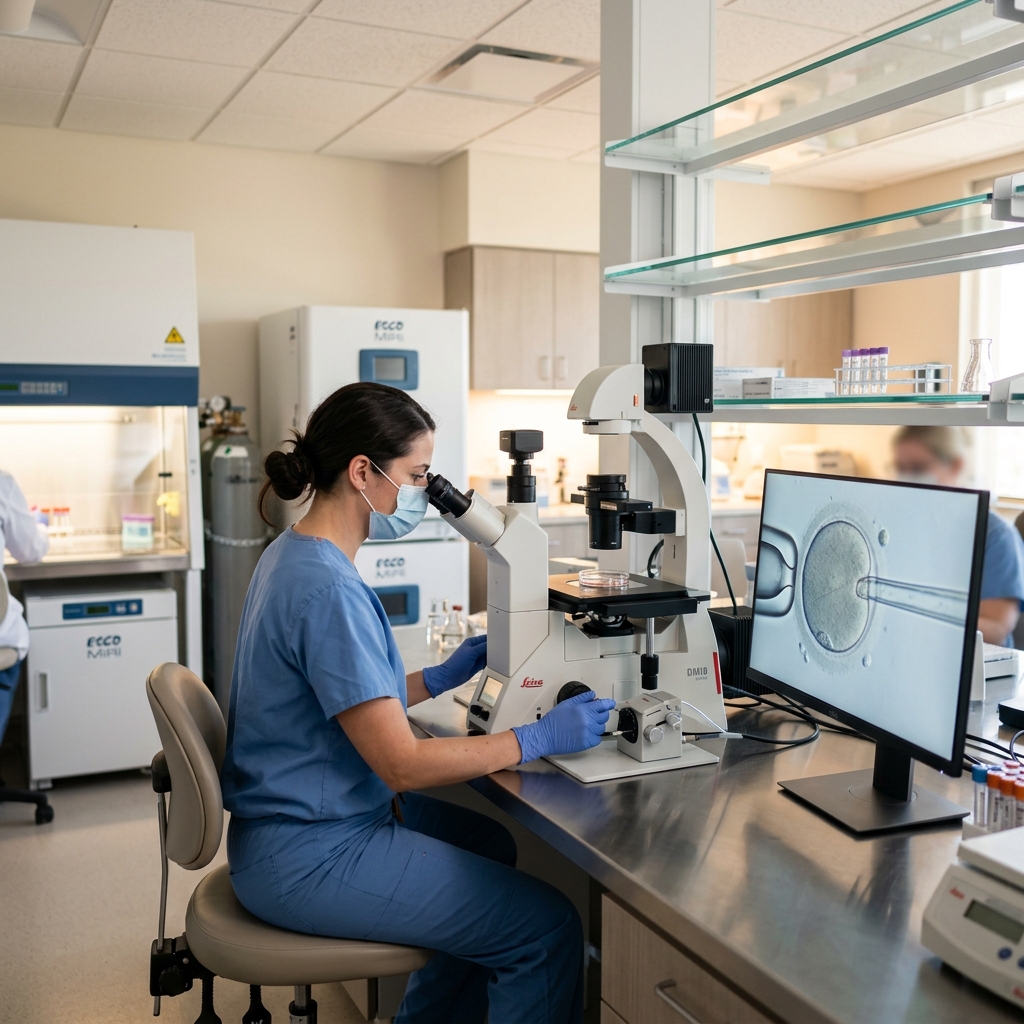
State-of-the-Art Embryology Lab
Positive-pressure Class 10,000 cleanroom lab with multi-stage VOC filtration, individual benchtop tri-gas incubators mimicking physiological fallopian tubes, and laser micromanipulation.
Patient-Centered Compassion
We honor the emotional courage of your family-building journey. Transparent clinical odds, clear treatment pricing without hidden surcharges, and empathetic support at every visit.
Advanced Lab Technology at Dr. Devkriti Embryology & Laparoscopic Centre
Class 10,000 Cleanroom Lab
Zero-VOC certified positive pressure embryology lab with multi-stage HEPA filtration, ensuring an untainted embryonic environment.
Benchtop Tri-Gas Incubators
Individual incubation chambers with rapid gas and temperature recovery, mimicking the natural in-vivo environment of the human fallopian tube.
Vitrification Cryo Storage
99%+ post thaw survival rate with ultra-rapid vitrification protocols for blastocysts, oocytes, and sperm samples.
Level 2 ART Certified Centre
Strict double witnessing protocols, complete patient confidentiality, and fully registered ART Level 2 clinic credentials.
Frequently Asked Questions About IVF
No. The egg collection is performed under short intravenous sedation administered by our consultant anesthetist. You will be comfortably asleep during the 15-minute procedure and will not feel any pain. Most patients recover within 1–2 hours and can return home the same day.
Medical research conclusively demonstrates that prolonged bed rest does not improve Embryology success rates. In fact, gentle movement improves pelvic blood circulation. You may resume light routine daily activities the following day, avoiding only heavy lifting, rigorous workouts, and high stress.
In conventional IVF, thousands of sperm are placed in a dish with each egg, and the most robust sperm fertilizes the egg naturally. In ICSI (Intracytoplasmic Sperm Injection), an embryologist selects a single healthy sperm under a high-magnification inverted microscope and injects it directly into the egg. ICSI is particularly recommended for male factor infertility or low fertilization history.
Our clinical pregnancy rates range between 55% and 75% per transfer depending on female age, blastocyst quality, and endometrial receptivity. By combining Day 5 blastocyst transfers with frozen embryo transfer (FET) cycles, we consistently achieve outcomes on par with top national fertility benchmarks.
IVF vs IUI — Which Treatment Is Right for You?
Both IVF and IUI are proven assisted reproductive technologies, but they differ significantly in complexity, lab intervention, timeline, and realistic pregnancy probability. Understanding these medical distinctions empowers you to choose the most effective path alongside Dr. Devkriti.
IUI (Intrauterine Insemination)
Specially washed and concentrated high motility sperm is placed directly inside the uterine cavity during natural or mildly induced ovulation. Fertilization occurs naturally inside the fallopian tubes.
Most Effective When:
- Mild male factor infertility (adequate motile sperm)
- Young couples (< 35 yrs) with unexplained infertility
- Mild ovulatory dysfunction responsive to oral medication
- Cervical hostility or physical ejaculation challenges
IVF (In Vitro Fertilization)
Eggs are retrieved from the ovaries, fertilized with selected sperm in our cleanroom lab, cultured to Day 5 blastocyst stage, and the healthiest embryo is transferred into the uterus. Full lab control over every critical milestone.
Most Effective When:
- Blocked, severely damaged, or absent fallopian tubes
- Moderate to severe male factor infertility (ICSI indicated)
- Moderate to severe Endometriosis or Adenomyosis
- 2–3 previous failed IUI attempts or low AMH ovarian reserve
IVF vs IUI — Comprehensive Clinical Comparison
Evidence-Based Parameters| Clinical Parameter | IUI Treatment | IVF Treatment (Advanced ART) |
|---|---|---|
| Fertilization Site | Occurs in vivo naturally inside the woman's fallopian tubes. | Occurs in vitro inside our Class 10,000 cleanroom lab; cultured to Day 5 blastocyst. |
| Laboratory Complexity | Basic andrology sperm wash and concentration (~1 hour lab prep). | High-precision micromanipulation, laser ICSI, and benchtop tri-gas incubation. |
| Fallopian Tube Status | Mandatory At least one tube must be completely patent. | Not Needed Bypasses tubes entirely. |
| Success Rate per Attempt | 10% – 20% per cycle (female age dependent). | 45% – 65%+ per blastocyst transfer (SET). |
| Cycle Timeline | Single 15-minute outpatient procedure on ovulation day. | 3 to 4 weeks (ovarian stimulation, retrieval, culturing, and embryo transfer). |
| Anesthesia Requirement | None required painless, similar to a routine pelvic exam. | Short 15-minute gentle IV sedation for egg collection (zero pain). |
| Male Factor Infertility | Effective for mild motility or count challenges only. | Overcomes severe male factor, poor morphology, and azoospermia (via ICSI/TESA). |
| Genetic Screening (PGT) | Not possible (fertilization occurs inside the body). | Fully compatible with Preimplantation Genetic Testing (PGT-A / PGT-M). |
| Cost & Financial Model | Lower cost per cycle; recommended for 2–3 initial attempts. | Higher initial investment; highest realistic cumulative pregnancy probability. |
Which Treatment Is Clinically Recommended Based on Cause?
Triage Guidelines| Primary Clinical Diagnosis | IUI Suitability | IVF / ICSI Suitability |
|---|---|---|
| Blocked or Damaged Fallopian Tubes | Not Feasible (Blocked Path) | Gold Standard (Bypasses tubes) |
| Severe Male Factor / Low Motility / TESA | Not Recommended | Primary Choice (with ICSI) |
| Unexplained Infertility (Female < 35 Yrs) | First-Line Choice (2–3 Cycles) | Next Step if IUI Fails |
| Ovulation Disorders (Responsive PCOS) | Recommended First-Line | For Resistant PCOS / OHSS Risk |
| Moderate to Severe Endometriosis / DIE | Limited (< 8–10% Success) | Highly Recommended First Line |
| Low Ovarian Reserve (Low AMH / Age > 37) | Delays Time-Sensitive Care | Optimal (DuoStim + Cryopreservation) |
| 3+ Previous Unsuccessful IUI Cycles | Diminishing Biological Returns | Definitive Next Treatment |
Still Unsure Which Path Is Right for You?
No two fertility profiles are identical. A comprehensive fertility evaluation by Dr. Devkriti Tiwari Dhirawani reveals your precise egg reserve, sperm dynamics, and tubal patency allowing us to advise the gentlest, highest-probability treatment suited to your family goals.
Embryology success rates by Age What to Expect
Age is the single most important factor influencing IVF success. It directly impacts egg quality, ovarian reserve, and the potential for a healthy pregnancy. Understanding age-related expectations helps you plan your treatment journey realistically.
35
Under 35 Years
Highest egg quality and robust ovarian reserve. Excellent response to stimulation.
35–37 Years
Gradual decline begins. Success remains favorable with tailored stimulation and embryo selection protocols.
38–40 Years
More noticeable decline. Embryo screening (PGT-A) and DuoStim protocol may be discussed to optimize outcomes.
40
Over 40 Years
Increased challenges. Donor egg strategies may be recommended. Every case is individually assessed by Dr. Devkriti for the best approach.
Factors Beyond Age That Influence Success
- Ovarian Reserve (AMH, AFC): Even at younger ages, low AMH can reduce response. DuoStim protocol can maximize egg collection.
- Lifestyle Factors: Diet, healthy weight, reducing stress, and avoiding smoking all positively influence egg and sperm quality.
- Underlying Conditions: PCOS, endometriosis, uterine anomalies, and thyroid imbalances impact receptivity — all addressed at our centre.
- Sperm Health: Advanced sperm selection (ICSI, IMSI) helps even in challenging male factor cases.
Age should never be a reason to give up hope. Book a consultation with Dr. Devkriti for an individualized assessment and realistic success estimates based on your profile.