Embryo Donation
Embryo Donation: A Complete, Compassionate Path to Parenthood
When both partners experience significant reproductive challenges, or when repeated conventional treatments have not succeeded, embryo donation offers a reliable, clinically proven pathway to carrying a pregnancy and giving birth to a healthy baby.
At Jabalpur Hospital Embryology & Laparoscopy Centre, under the clinical leadership of Dr. Devkriti Tiwari Dhirawani, embryo donation is conducted with rigorous medical ethics, strict Indian ART Act compliance, and warm emotional empathy. Embryos are created from young, comprehensively screened egg and sperm donors, cryopreserved at the advanced blastocyst stage, and transferred into a carefully prepared uterine lining for peak implantation success.
ART Compliant
100% Legal Protection70%+ Success
Top-Grade BlastocystsDonor Screening
Genetic & Viral PanelsPregnancy Joy
Carry & Bond Full-Term
What is Embryo Donation & How Does It Work?
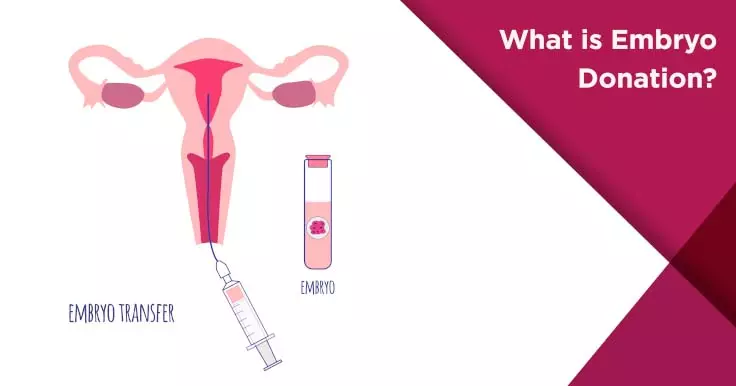
Embryo donation involves pairing screened donor oocytes with donor spermatozoa to cultivate healthy blastocysts in our specialized cleanroom embryology laboratory. Once confirmed viable, the embryos are cryopreserved via rapid vitrification.
The recipient mother’s uterus is gently primed using oral estrogen and natural progesterone until her endometrial lining achieves the perfect trilaminar thickness (≥ 8 mm). A single thawed blastocyst is then transferred directly into her uterus through an ultra-fine catheter — completely painless, taking less than 10 minutes without anesthesia.
When Is Embryo Donation Recommended?
Embryo donation provides the most realistic, successful route to parenthood in specific clinical circumstances:
Severe Combined Infertility
Where both partners face reproductive hurdles simultaneously, such as low egg quality coupled with severe male factor.
Premature Ovarian Insufficiency
Early menopause, irreversible loss of follicular reserve, or prior pelvic surgeries before age 40.
Multiple Failed IVF Cycles
Repeated cycles resulting in embryo developmental arrest, poor blastocyst cleavage, or recurrent implantation failure.
Unretrievable Sperm Factors
Non-obstructive azoospermia where surgical sperm retrieval (Micro-TESE) yielded zero viable spermatozoa.
Severe Genetic Risks
High risk of transmitting serious inheritable monogenic disorders or chromosomal translocations to offspring.
Advanced Maternal Age
Women aged 40 and above whose ovarian reserve is depleted, but who possess a healthy, receptive uterus to carry a child.
Uterine Receptivity & Age Horizons in Embryo Donation
In traditional IVF using a woman’s own eggs, pregnancy rates drop precipitously after age 35 due to ovarian aging and egg chromosomal aneuploidy. However, in Embryo Donation, the story is completely different. The human uterus retains its receptivity and responds consistently to hormonal priming well into the late 40s!
Age: 30 to 35
Prime Reproductive AgeUterine lining responds swiftly with minimal hormonal priming. Exceptional vascularization and high endometrial receptivity allow for rapid single blastocyst implantation.
Age: 36 to 40
Follicular Transition AgeWhile ovarian egg quality declines significantly during this period, uterine tissue remains robust. Standard bio-identical HRT protocols create an optimal trilaminar implantation window.
Age: 41 to 45
Advanced Maternal WindowNatural egg reserves are largely exhausted, but donor embryos derived from young donors bypass all chromosomal age barriers, yielding high cumulative live-birth rates.
Age: 46 to 50
Perimenopausal / PostmenopausalEven post-menopause, a mock cycle followed by customized estrogen/progesterone preparation reliably reactivates endometrial receptivity, allowing healthy pregnancy carriage under medical supervision.
Key Medical Takeaway: The uterus does not age at the same rate as the ovaries. With healthy cardiovascular screening and personalized endometrial preparation, successful full-term pregnancy is achievable across diverse age horizons.
The Embryo Donation Journey: Six Guided Steps
A transparent, clinically calibrated timeline designed for comfort, clarity, and maximal implantation likelihood:
1. Initial Clinical Evaluation & Counseling
Comprehensive medical history, transvaginal 3D ultrasound of the uterus, mock transfer assessment, and empathetic psychological counseling to align on your family goals.
2. Phenotype & Donor Selection
Embryos are selected based on physical traits (skin tone, eye/hair color, height), blood group compatibility, and rigorous genetic and infectious screening panels.
3. Endometrial Preparation
Oral or transdermal bio-identical estrogen builds a lush uterine lining, verified by ultrasound for optimal thickness (8 to 11 mm) and trilaminar pattern before progesterone initiation.
4. Painless Blastocyst Transfer (FET)
A top-grade thawed Day 5 blastocyst is gently delivered into the uterine cavity under real-time abdominal ultrasound guidance. Zero pain, zero anesthesia, taking just 5 to 10 minutes.
5. Luteal Phase Receptivity Support
Targeted natural progesterone and micronutrient therapy sustain the endometrial lining during the critical implantation window, backed by continuous medical team availability.
6. Pregnancy Confirmation & Obstetric Care
A quantitative serum Beta-hCG blood test roughly 14 days after transfer confirms successful implantation, followed by your first viability ultrasound at 6 weeks.
Benefits of Embryo Donation
Embryo donation creates an avenue of genuine joy when other pathways feel exhausted, offering distinct clinical and emotional benefits:

Proven High Success Rates
Donors undergo rigorous screening and egg quality checks, yielding strong Day 5 blastocysts with peak implantation rates of 70% or more.
Carrying Your Own Pregnancy
You experience the entire journey of pregnancy, feeling your baby move, giving birth, and forming an intimate maternal bond from the first moment.
Cost Effective & Fast Timeline
Because embryos are already vitrified and ready for transfer, recipients bypass lengthy ovarian stimulation cycles and associated medication costs.
Frequently Asked Questions About Embryo Donation
Medically and legally verified answers to common questions about embryo adoption: